
Unvented CylinderInstallation & RepairsAcross Bolton & Manchester
Mains-pressure hot water to every tap and shower in your home — without the need for a cold water storage tank. We design, install, and repair unvented systems that deliver powerful, consistent performance.
G3 qualified • All major brands • Fully guaranteed workmanship
25+ Years
Experience
G3 Certified
Qualification
Mains Pressure
Performance
All Major
Brands
Parts & Labour
Guarantee
What Is an Unvented Hot Water Cylinder?
An unvented hot water cylinder stores hot water at mains pressure — typically 2-4 bar — and delivers it directly to taps and showers without the pressure loss associated with traditional gravity-fed systems. This means strong, consistent flow at every outlet, on every floor, simultaneously.
Unlike vented (gravity-fed) cylinders that rely on a cold water storage tank in the loft, unvented systems connect directly to the mains water supply. This eliminates the tank entirely — freeing up loft space and removing the risk of frozen or contaminated tank water.
Unvented cylinders are pressurised vessels and must be installed, commissioned, and maintained by engineers holding the G3 Unvented Hot Water qualification. This is a legal requirement — not optional. At Conroy Plumbing & Heating, our engineers hold the G3 qualification and have extensive experience with all major unvented cylinder brands.
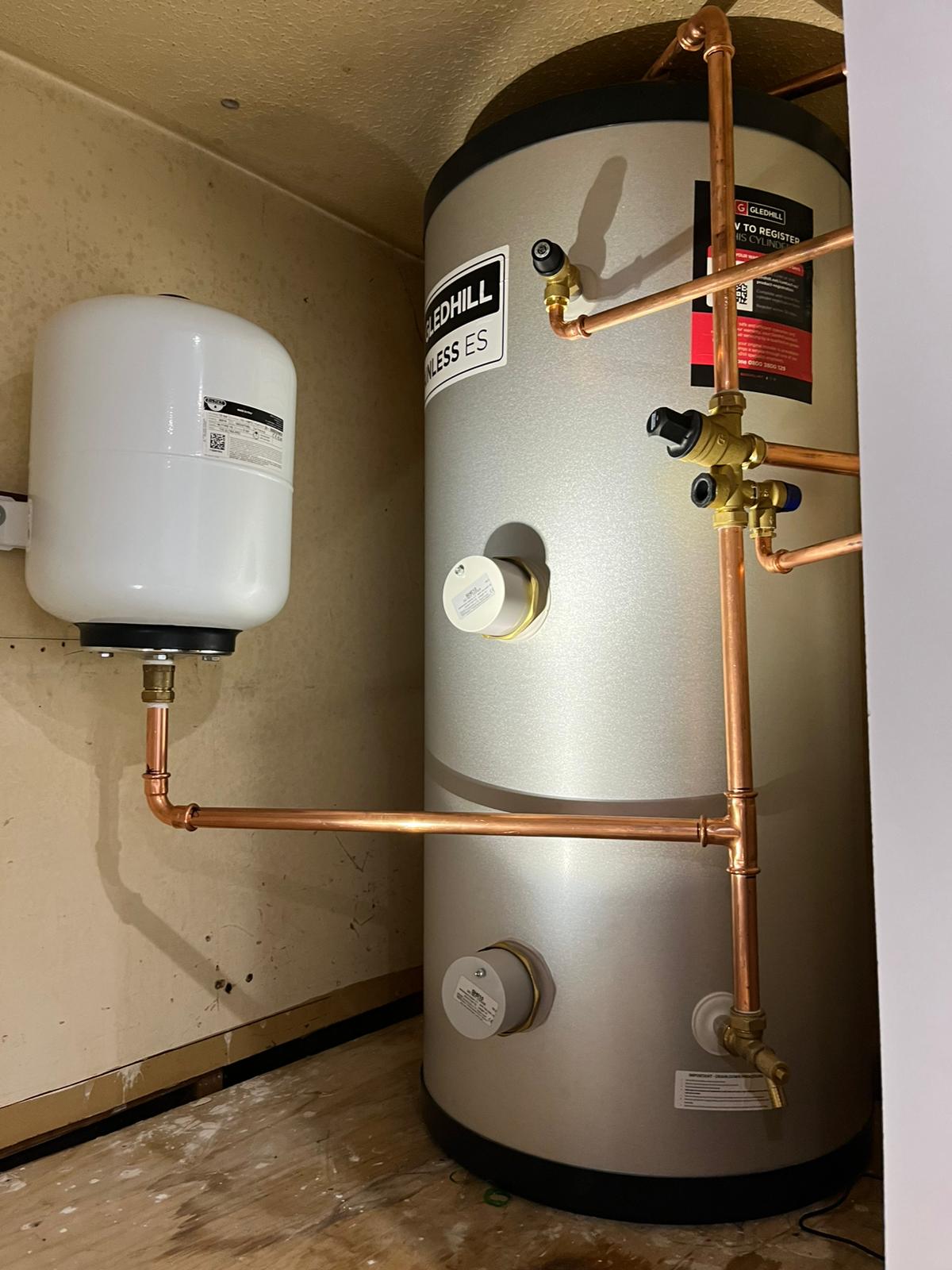
We install cylinders from Megaflo, Heatrae Sadia, Gledhill, Telford, Range, and other leading manufacturers. We also carry out repairs, re-commissioning, and annual maintenance to keep your system performing safely.
Real Work Examples
Why Unvented Cylinders Need Specialist Attention
Because unvented cylinders operate at mains pressure with stored hot water, they contain significant energy. A fault in the pressure relief system, temperature control, or expansion vessel can create serious safety risks. This is why regulations require qualified engineers and annual inspection.
- An uninstalled or failed expansion vessel causes the pressure relief valve to discharge constantly — wasting water and energy
- A failed temperature and pressure relief valve (T&P) removes the last line of safety defence against overheating
- Incorrect installation without proper discharge pipework creates a scalding risk
- Unvented cylinders installed without Building Regulations notification are non-compliant and can affect property sales
- Limescale build-up in hard water areas reduces capacity and efficiency progressively
- DIY work on unvented systems is illegal and invalidates insurance
Our Unvented Cylinder Installation Process
Assessment & Sizing
We assess your hot water demand based on the number of bathrooms, occupants, and usage patterns. We measure incoming mains pressure and flow rate to confirm suitability for an unvented system.
Cylinder Selection
Based on the assessment, we recommend the right capacity cylinder — typically 150L for 1-2 bathrooms, 210-250L for 3+ bathrooms. We discuss brands, features, and pricing.
Installation
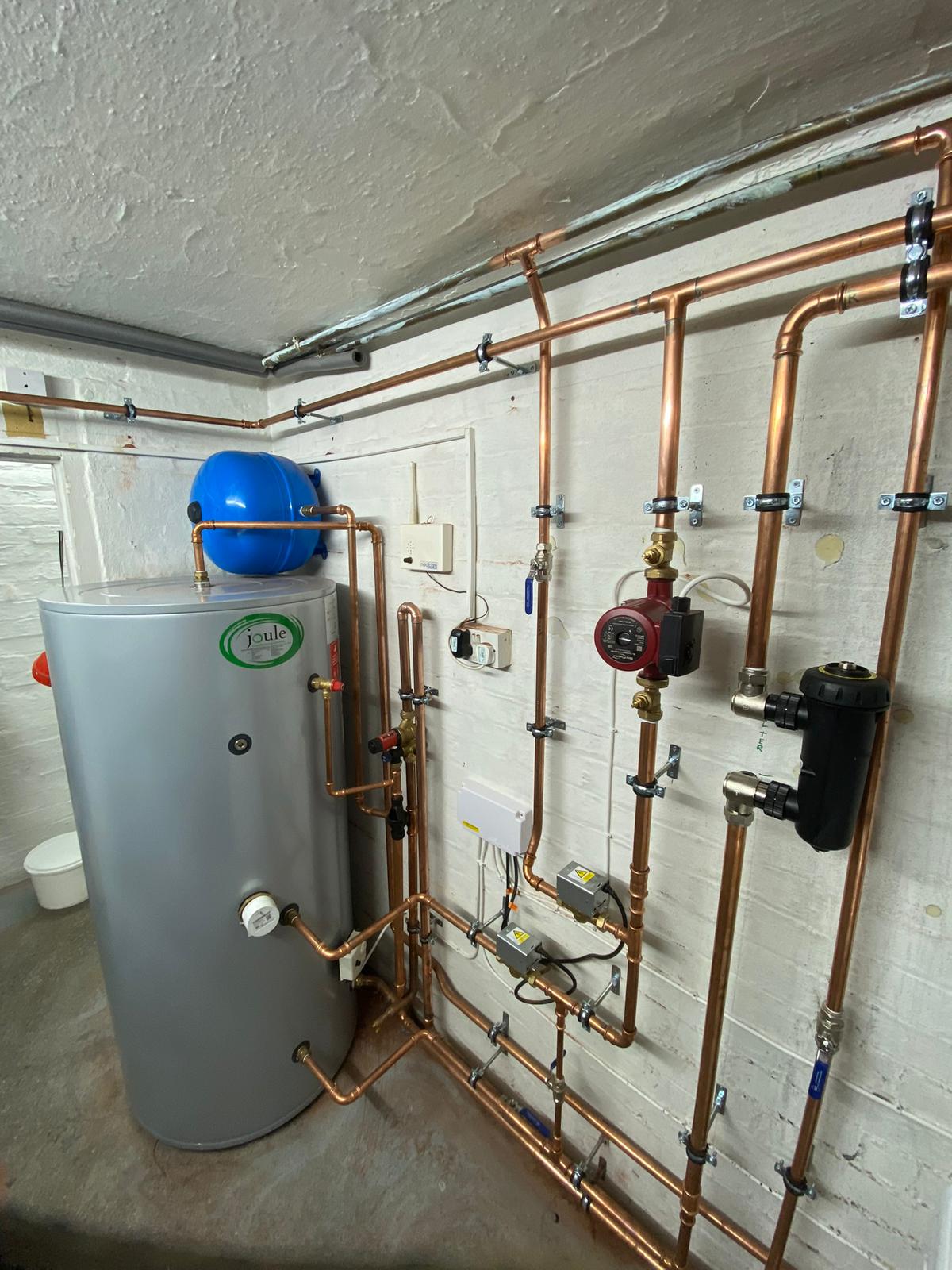
We install the cylinder, connect mains cold supply, hot distribution pipework, heating coil connections, expansion vessel, and all safety controls. Discharge pipework is routed to a safe termination point.
Commissioning
We fill, pressurise, and commission the system to manufacturer specifications. We test every safety device — expansion vessel, T&P valve, tundish, and discharge — to confirm correct operation.
Registration & Handover
We submit Building Regulations notification, register the warranty, and provide all documentation. We explain the safety controls and annual maintenance requirements.
Benefits of Unvented Hot Water Systems
Mains-Pressure Hot Water
Strong, consistent flow at every tap and shower — no more weak pressure on upper floors or poor flow when two outlets run simultaneously.
No Cold Water Tank
Eliminating the loft tank frees up space, removes freezing risk, and ensures drinking-quality water from every hot tap.
Balanced Pressure
Hot and cold water arrive at the same pressure, making thermostatic shower valves more stable and responsive.
G3 Qualified Installation
Our engineers hold the legally required G3 qualification. Your system is installed correctly, safely, and in full compliance with Building Regulations.
All Major Brands
Megaflo, Heatrae Sadia, Gledhill, Telford — we install and service all leading unvented cylinder brands.
Annual Maintenance
We offer annual inspection and maintenance to keep safety devices functioning and the warranty valid.
Unvented Cylinders: Complete Technical Guide
How Unvented Systems Work
An unvented cylinder is connected directly to the cold mains supply. Water enters the cylinder at mains pressure, is heated by an immersion heater or a coil connected to the boiler, and is stored ready for use. When a hot tap is opened, mains pressure pushes hot water out of the top of the cylinder. An expansion vessel or internal air bubble accommodates the increased volume as water heats up. Safety valves — temperature, pressure, and combined T&P — provide multiple layers of protection against overpressure.
Sizing the Cylinder Correctly
Undersized cylinders run out of hot water during peak demand. Oversized cylinders waste energy maintaining unnecessary volumes at temperature. A 150-litre cylinder suits a home with one bathroom. A 210-litre model handles two bathrooms with moderate usage. Homes with three or more bathrooms, or those with high-flow showers, typically need 250-300 litres. We calculate based on your actual usage rather than defaulting to a standard size.
Safety Devices Explained
Every unvented cylinder has multiple safety layers: a thermostat controls the normal operating temperature (typically 60-65°C); a high-limit thermostat cuts power if the temperature exceeds the set point; a temperature and pressure relief valve (T&P) opens if both temperature and pressure exceed safe limits; and a tundish provides a visible air gap in the discharge pipework so you can see if the T&P valve is activating. These devices must be tested annually.
Expansion Vessels and Air Gaps
As water heats from 10°C to 65°C, it expands by approximately 4%. In a 200-litre cylinder, that is 8 litres of extra volume that must be accommodated. External expansion vessels contain a rubber diaphragm that compresses to absorb this expansion. Internal air bubble systems use a pocket of air at the top of the cylinder. Both methods work reliably when properly maintained — but expansion vessel pre-charge pressure must be checked annually.
Unvented Repairs We Carry Out
Common unvented repairs include expansion vessel re-pressurisation, T&P valve replacement, immersion heater failure, thermostat replacement, coil descaling, tundish and discharge pipe corrections, and motorised valve repairs on indirect models. We carry common parts and can source specialist components from all major manufacturers within 24-48 hours.
Frequently Asked Questions
Looking for something else? Phil also covers 24/7 emergency plumbing, full boiler installation and boiler repairs, annual boiler servicing, central heating installation, power flushing, leak detection and landlord gas safety certificates (CP12). Browse the full list on our services page or see recent jobs and customer reviews.
Based in Bolton, we work across Bolton, Manchester, Bury, Blackburn, Chorley, Wigan, Preston and Salford. See all areas we cover, learn more about Phil Conroy, or get in touch for a free quote.
Related Services
Ready to Get ThisSorted Properly?
Speak directly to Phil. No call centres, no scripts — just honest advice, fair pricing, and work you can rely on.