
Radiator Installation& Replacement AcrossBolton & Manchester
Whether you need additional radiators in cold rooms, upgrades to more efficient models, or replacements for corroded units — every radiator we fit is correctly sized for the room and balanced within your system.
Correctly sized to heat-loss calculations • Fully guaranteed • Finance available
25+ Years
Experience
Heat-Loss Calc
Sizing
All Styles
Types
TRVs Fitted
Controls
Parts & Labour
Guarantee
Getting Radiator Installation Right
A radiator is not a generic component you pick based on wall space. Each room has a specific heat demand determined by its size, insulation, glazing, and exposure. A radiator that is too small will never heat the room adequately, no matter how long you leave the heating on. One that is too large wastes energy and creates uncomfortable temperature swings.
At Conroy Plumbing & Heating, we calculate the BTU requirement for each room before recommending a radiator. This means you get even, comfortable warmth — not a vague improvement that still leaves cold spots.
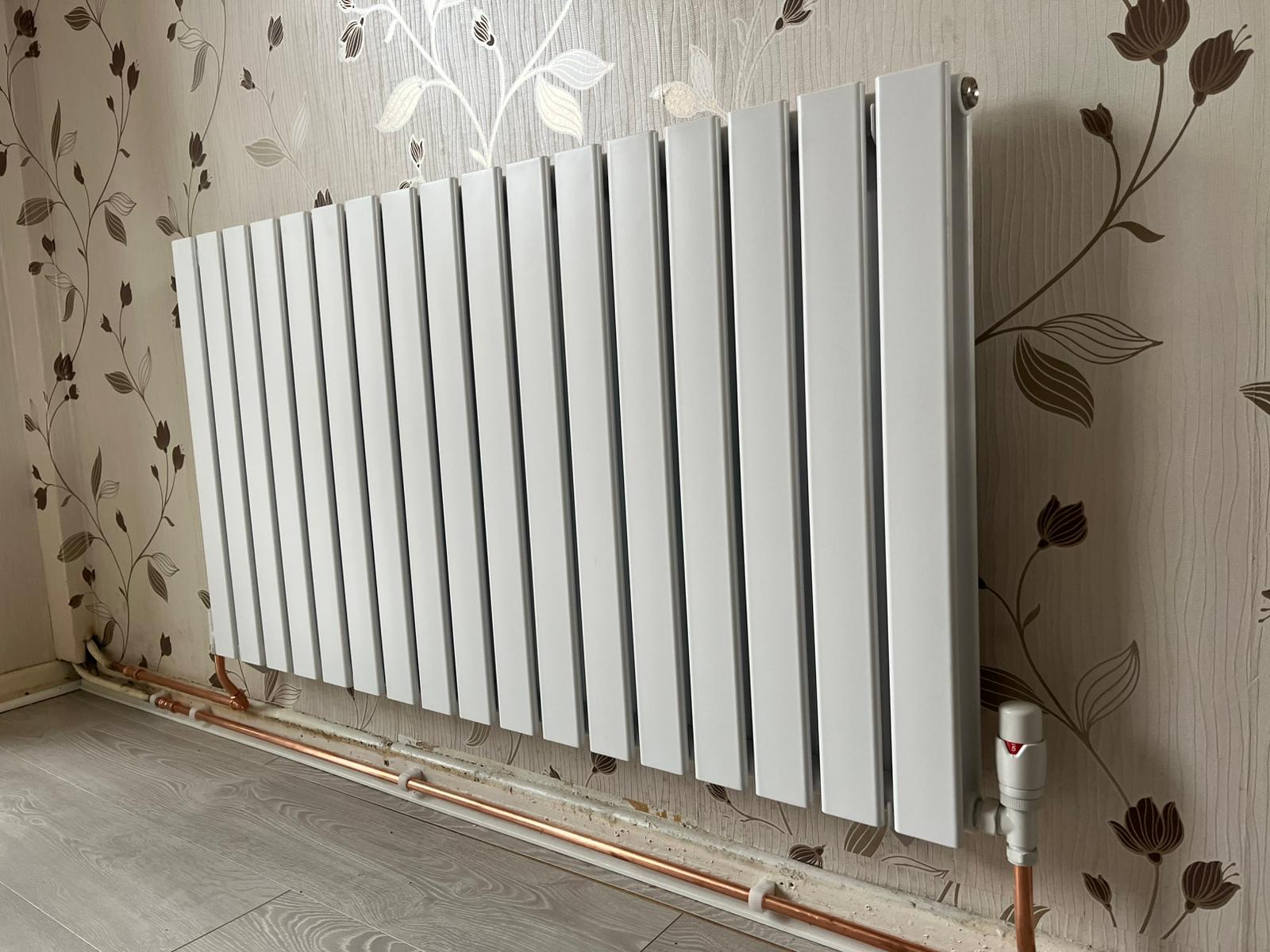
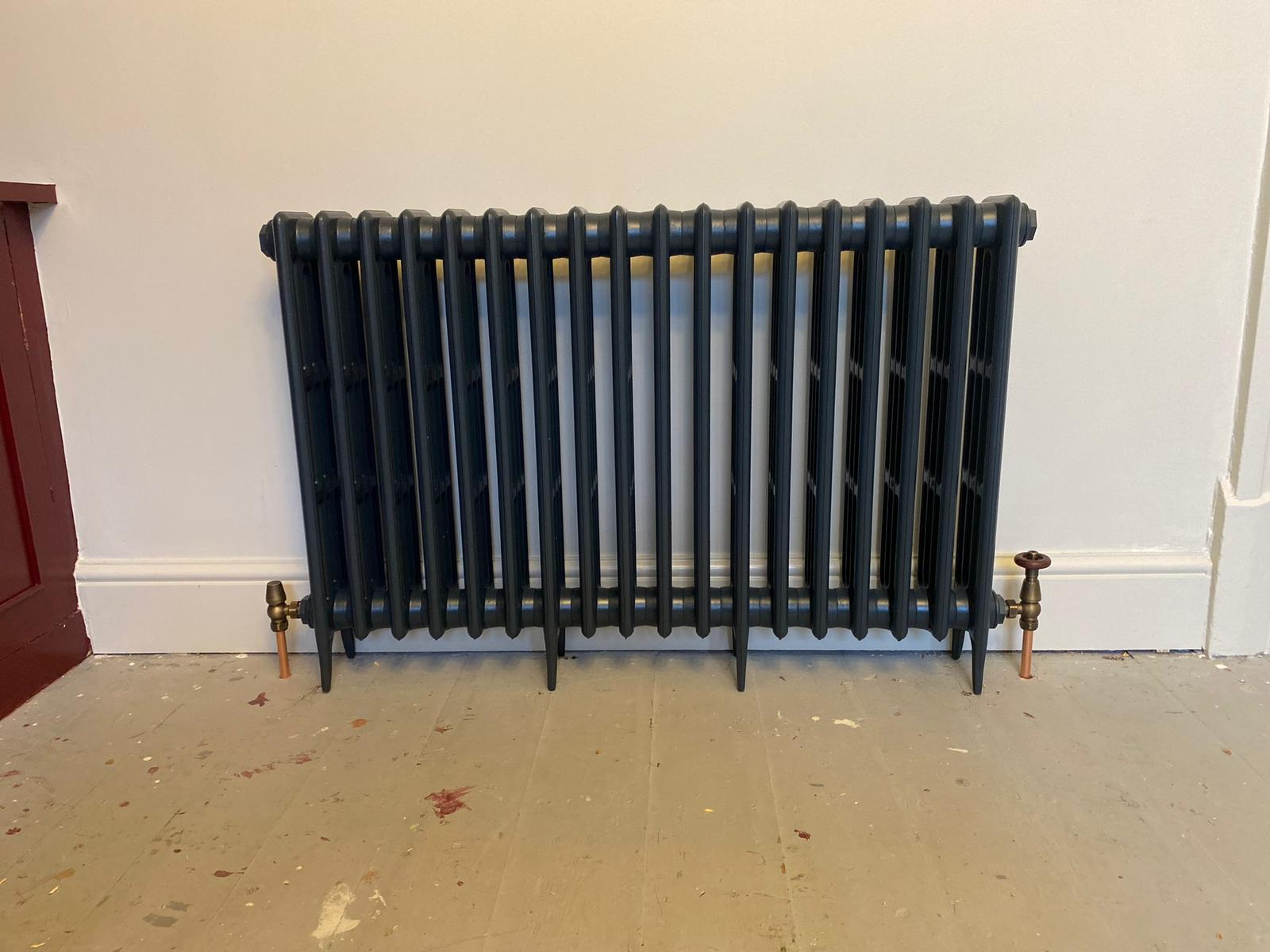
We fit all types: standard panel convectors, compact radiators, vertical designer radiators, column radiators, towel rails, and low-surface-temperature models for schools and care homes. Each installation includes thermostatic radiator valves for individual room control.
Whether you are adding radiators to a cold extension, replacing corroded units, or upgrading for better efficiency, we handle the pipework, connections, balancing, and commissioning as a complete service.
Real Work Examples
Why the Wrong Radiator Costs You More Than You Think
Installing a radiator without calculating heat demand is guesswork — and guesswork costs money. An undersized radiator forces your boiler to run longer trying to reach the set temperature, burning more gas for less comfort. Your thermostat keeps calling for heat because the room never reaches target.
- Undersized radiators increase gas consumption because the boiler runs longer trying to reach temperature
- Oversized radiators create uncomfortable temperature spikes and cause the boiler to short-cycle
- Radiators without TRVs cannot be controlled room-by-room — heating empty rooms wastes energy
- Corroded radiators leak slowly, damaging flooring and causing pressure loss in the system
- Poorly positioned radiators create cold draughts and uneven air circulation
- Old single-panel radiators output 40-60% less heat than modern double-panel convectors of the same size
How We Install Radiators
Room Assessment
We measure the room, assess insulation, glazing, and exposure, and calculate the exact BTU output required. This determines the radiator size and type.
Radiator Selection
Based on the calculation, we recommend radiators that meet the heat demand and suit the room's layout and aesthetics. We discuss options including panel, column, vertical, and designer styles.
Installation
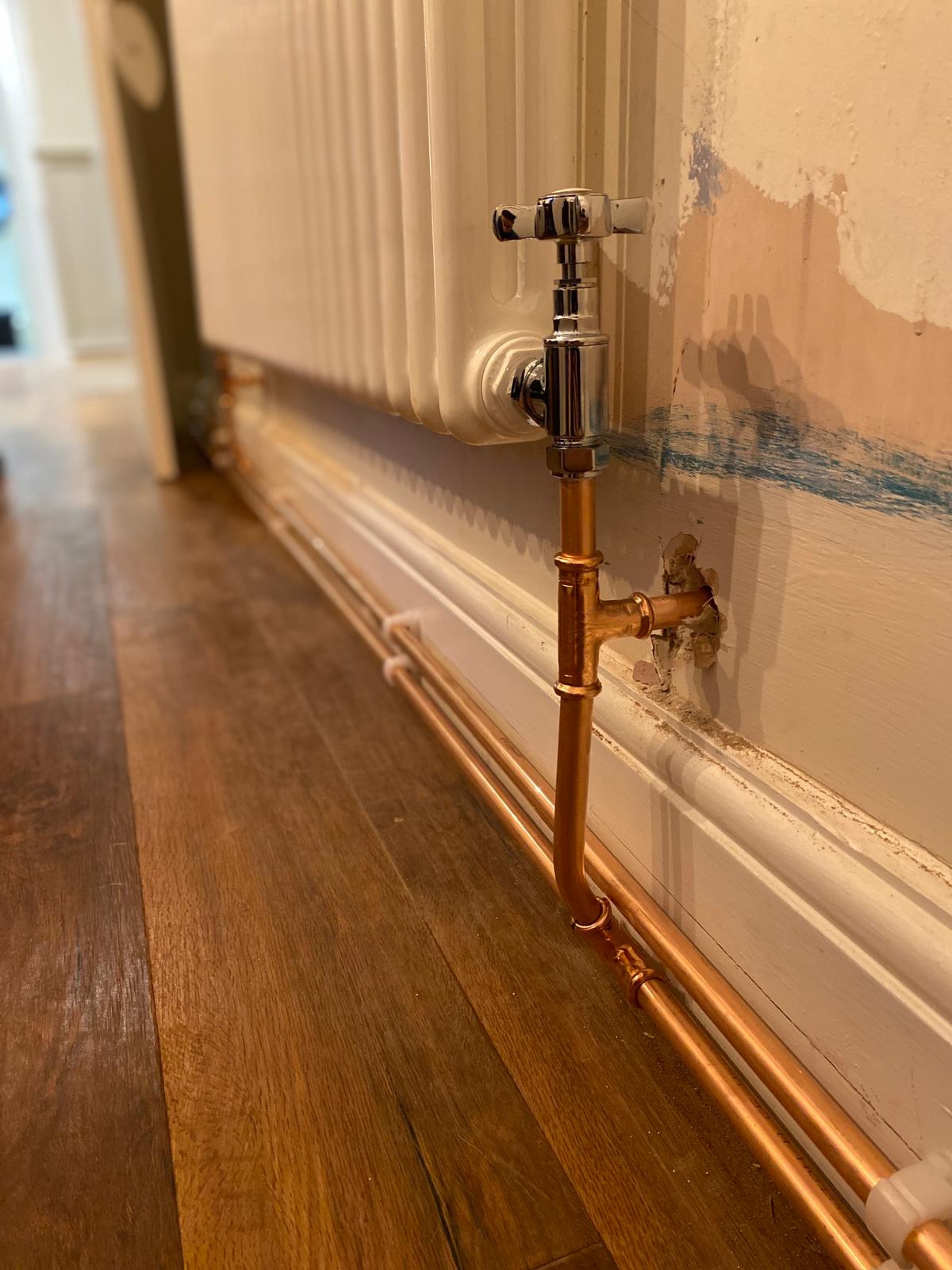
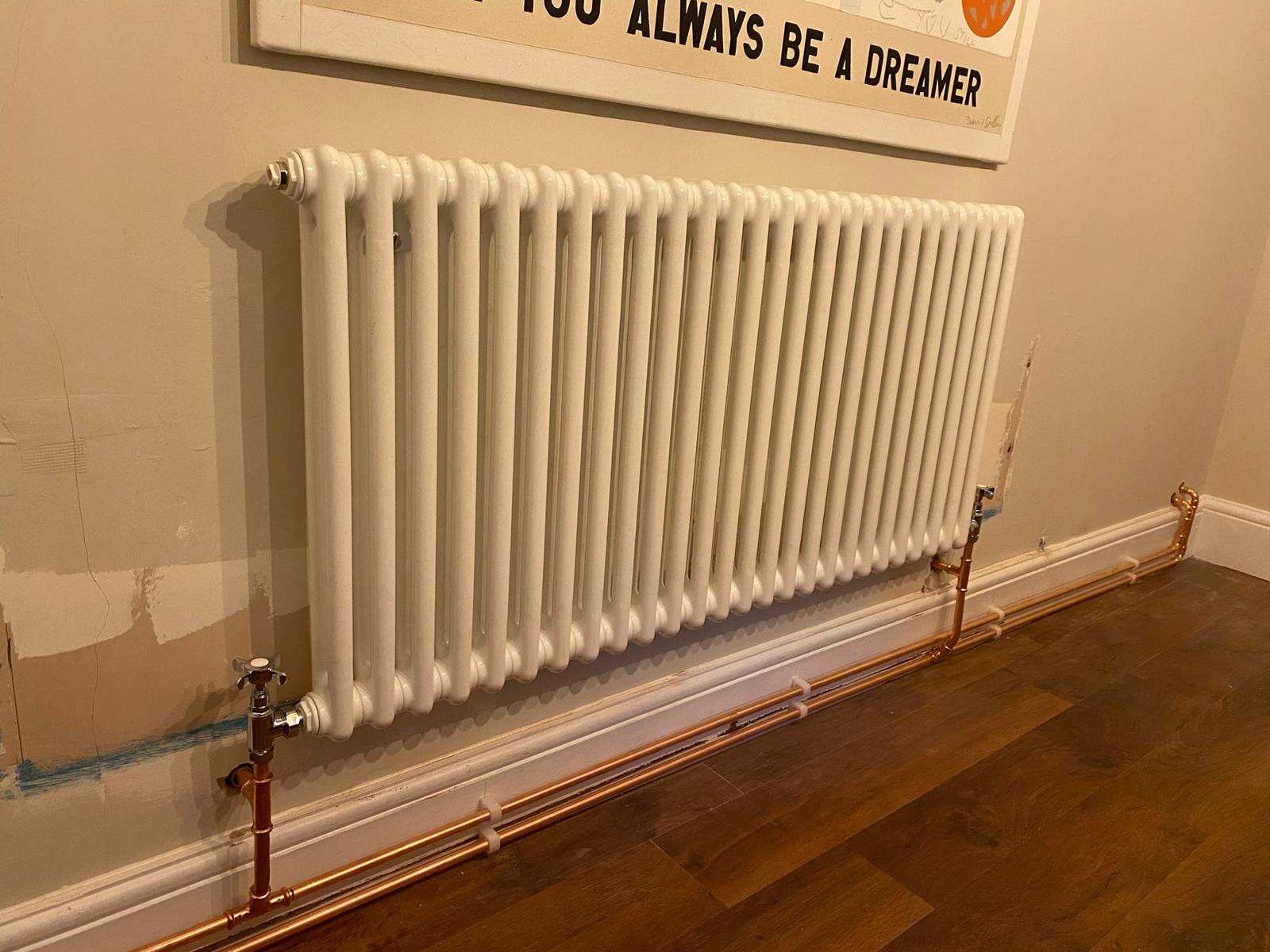
We fit the radiator with new brackets, valves, and connections. If additional pipework is needed, we route it neatly — under floors or along skirting to minimise visual impact.
System Integration
The new radiator is connected to your existing system, filled, and bled. We fit a thermostatic radiator valve for room-by-room temperature control.
Balancing
We rebalance the entire system to ensure the new radiator receives the correct flow rate without starving existing radiators. This step is critical and often skipped by less thorough installers.
Benefits of Professional Radiator Installation
Correctly Sized
Every radiator is matched to the room's actual heat demand using BTU calculations — no guessing, no cold rooms.
Full System Balancing
After installation, we rebalance the entire system so every radiator receives the correct flow. No radiator is starved or flooded.
TRVs for Control
Thermostatic radiator valves on every unit give you independent temperature control in each room — reducing waste and improving comfort.
Neat Pipework
We route new pipework under floors or along skirting, keeping the installation clean and unobtrusive.
All Styles Available
Panel, column, vertical, designer, towel rails — we fit the style that matches your room and your taste.
Guaranteed Work
All installations carry a guarantee on parts and labour. The radiator performs as designed, or we make it right.
Finance Available
Representative 11.9% APR
Pay for your new installation in flexible monthly repayments*
If you wish to spread the cost of your new installation, Conroy PHR LTD can introduce you to TradeHelp Ltd. TradeHelp can offer monthly repayments through leading UK finance providers over periods from 2 – 10 years. There is no deposit required and no penalty for early settlement. Credit is subject to application and status.* Available on radiator installations.
Interest bearing credit
Representative 11.9% APR
Monthly repayments over periods from 2 – 10 years.
Interest free credit
12 or 24 months
Interest free credit, with the loan amount payable in 12 or 24 equal monthly instalments.
Finance can be introduced on:
- New boiler installations
- Power flushing
- Radiator installations
- Bathroom installations
*Conroy PHR LTD is an Introducer Appointed Representative of TradeHelp for the purpose of credit broking introductions only. Our firm reference number is 1059442. TradeHelp is a trading style of TradeHelp Ltd, Marchwiel Centre, Bryn Lane, Wrexham Ind Est, LL13 9UT, registered in England (03712438), authorised and regulated by the Financial Conduct Authority (firm reference number 697812). TradeHelp are a credit broker, not a lender, and offer loans from a small panel of carefully selected lenders. TradeHelp do not offer financial advice and do not charge you for credit broking services. All loans are subject to status.
Radiator Installation: Technical Guide
BTU Calculations Explained
BTU (British Thermal Unit) is the measure of a radiator's heat output. To calculate the requirement, we multiply room volume by a factor determined by insulation quality, window type, number of external walls, and room usage. A well-insulated living room needs roughly 40-50 BTU per cubic foot. A poorly insulated room with large windows may need 60-70 BTU per cubic foot. Getting this right is the difference between a warm room and a frustrating cold spot.
Radiator Types and Their Applications
Double-panel double-convector (Type 22) radiators are the standard choice for most rooms — they offer high output in a compact footprint. Single-panel (Type 11) models work well in small rooms or hallways. Vertical radiators save wall space in narrow rooms. Column radiators suit period properties. Low-surface-temperature radiators are required in certain settings to prevent burns. Towel rails combine heating with bathroom functionality.
Positioning for Maximum Efficiency
Ideally, radiators should be placed under windows. The rising warm air from the radiator counteracts the falling cold air from the glass, creating even air circulation. Where window placement is not possible (e.g. furniture layouts or floor-to-ceiling glazing), we position radiators on the coldest wall to achieve similar air mixing.
Replacing Old Radiators
If you are replacing corroded or inefficient radiators, a modern Type 22 radiator of the same physical dimensions will typically output 30-60% more heat than an old single-panel model. This means you may be able to fit a smaller, neater radiator that still heats the room better than the original — freeing up wall space.
Adding Radiators to Existing Systems
Adding radiators to an existing system requires checking that the boiler and pump can handle the additional demand. If the total heat load exceeds the boiler's output, adding radiators will reduce performance across the entire system. We check capacity before recommending additions and advise on any upgrades needed.
Frequently Asked Questions
Looking for something else? Phil also covers 24/7 emergency plumbing, full boiler installation and boiler repairs, annual boiler servicing, central heating installation, power flushing, leak detection and landlord gas safety certificates (CP12). Browse the full list on our services page or see recent jobs and customer reviews.
Based in Bolton, we work across Bolton, Manchester, Bury, Blackburn, Chorley, Wigan, Preston and Salford. See all areas we cover, learn more about Phil Conroy, or get in touch for a free quote.
Related Services
Ready to Get ThisSorted Properly?
Speak directly to Phil. No call centres, no scripts — just honest advice, fair pricing, and work you can rely on.